
Hit-and-Run Bike Crashes: No Plate, No Witnesses — What Options Do You Have?
Most of us got into gravel riding because we wanted to get away from traffic. The whole point is to find the dirt, the quiet roads, the routes where you can actually breathe. But the reality of cycling in San Diego is that cars are part of the equation, and eventually most riders will have a close call. Some will have worse than that.
When that happens, the legal and insurance side of things can feel like a completely foreign language at exactly the moment you're least equipped to learn it. Who covers your bike? What do you say to the driver? What do you do if they drive off? What if your $9,000 build is sitting on a rack when someone rear-ends you in a parking lot?
These are the questions we brought to Josh Bonnici, rider and Managing Attorney at Bonnici Law Group. Josh has raced BWR, done Leadville twice, and medaled at Track Cycling Nationals. We're proud to have Bonnici Law Group as an official Gravelstoke Ally for 2026 and a supporting partner of our monthly ride series. Josh recently joined us for our July ride on his new Ari Shafer and held his own through Penasquitos Canyon, a trail he knows well and rides often.
Over the coming weeks we'll be publishing a series of community questions with Josh, each one answered in depth from a legal perspective. We're starting with the scenario most riders hope they never have to deal with.
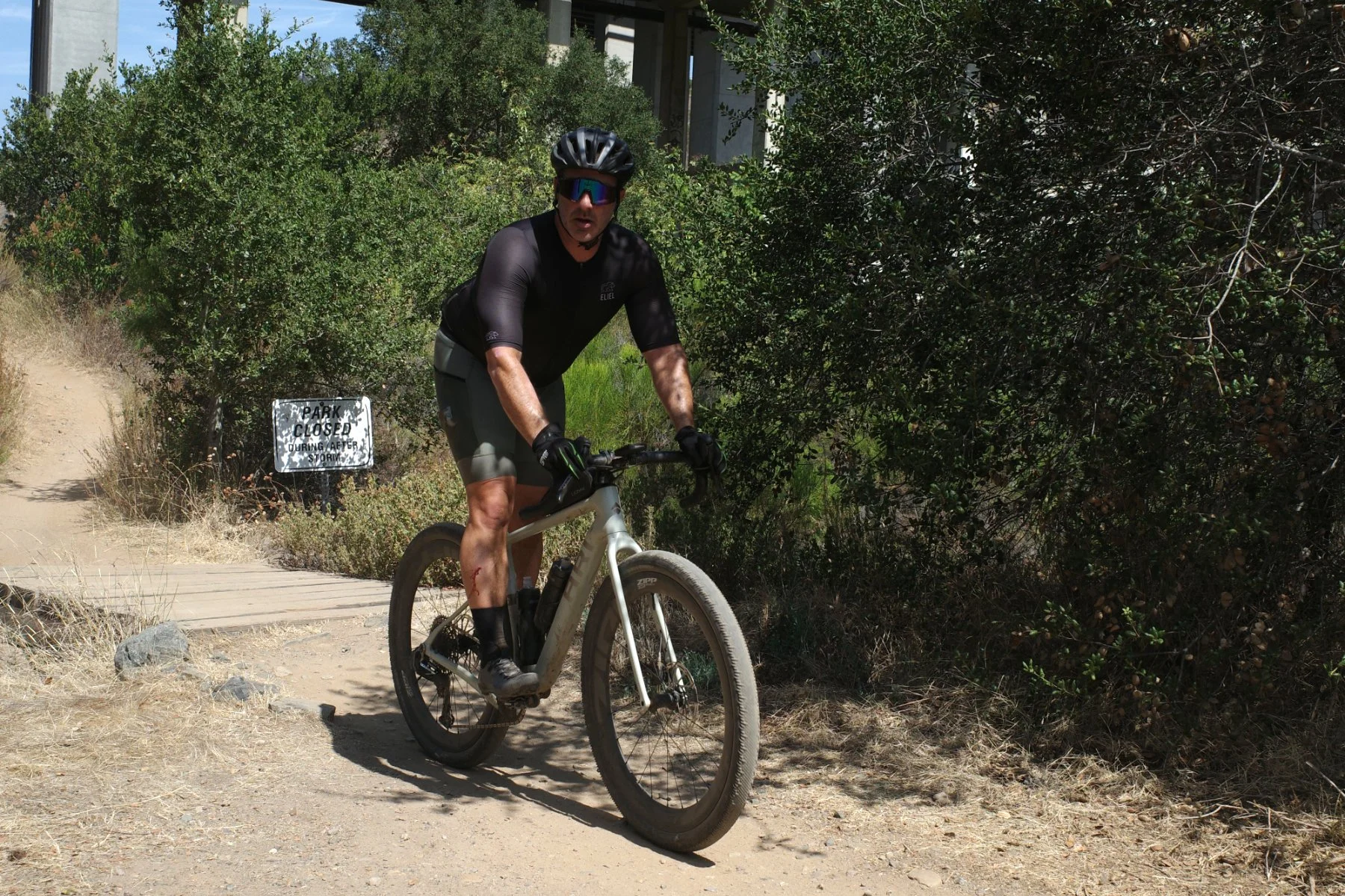
Josh Bonnici, Manager Attorney, Bonnici Law Group
Hit-and-Run Bike Crashes: No Plate, No Witnesses — What Options Do You Have?
There are few things more infuriating than being hit by a driver who leaves.
You are on the ground. Your bike is damaged. You may be bleeding, hurt, concussed, or in shock. And the person who caused it is gone.
For cyclists, hit-and-run crashes are especially frustrating because the driver may already have every advantage: they are in a car, you are exposed, and if they leave before anyone gets a plate, it can feel like the whole case disappeared with them.
But a hit-and-run does not always mean you are out of options. It does mean you need to move quickly, preserve what you can, and think beyond the obvious evidence.
Start With Safety and a Police Report
The first priority is medical safety. Get out of the roadway if you can, call 911, and ask for police and medical assistance. Even if you think you are “mostly okay,” make the report.
In California, hit-and-run incidents can affect not only the search for the driver, but also your ability to make an insurance claim later. Many insurers will want a police report before treating the crash as a hit-and-run or uninsured motorist (UM) claim. California law also imposes duties on drivers involved in crashes, including stopping and exchanging information, with additional duties when someone is injured.
That report matters. It creates a timestamp. It documents that the crash happened. It helps prevent an insurance company from later suggesting that the incident is unverifiable or that your injuries came from something else.
No Plate Does Not Mean No Evidence
A lot of riders assume that if they did not get the plate, the case is over. Not necessarily.
Think like a cyclist retracing a route. Where did the crash happen? What direction was the driver going? Was there a traffic signal? A gas station? A brewery? A coffee shop? A school? A city bus stop? A doorbell camera? A Tesla parked nearby? A construction site? A delivery truck?
Video can come from unexpected places. Businesses often have exterior cameras. Homes may have Ring, Nest, or other doorbell systems. Municipal or transit cameras may not always be easy to obtain, but they can exist. Nearby vehicles may have dash cameras or sentry-type recording systems.
The catch is timing. Video gets overwritten. Sometimes within days. Sometimes sooner. That is one reason Bonnici Law Group often encourages injured cyclists to act quickly after a hit-and-run — not because every case needs to become a lawsuit immediately, but because evidence has a shelf life.
Look for Debris, Paint Transfer, and Physical Contact
If a car touched you, your bike, or your gear, document everything.
Photograph the bike from all angles. Look for paint transfer on the frame, fork, handlebar, shifter, rear derailleur, wheel, pedal, shoe, helmet, or clothing. Photograph broken glass, car parts, mirror fragments, plastic trim, or debris in the road. Sometimes a small piece of the vehicle can help identify make, model, or color.
This is also important for insurance. In California, hit-and-run uninsured motorist claims often involve a “physical contact” issue. California Insurance Code section 11580.2 addresses uninsured motorist coverage, and hit-and-run claims generally require proof that the unidentified vehicle made physical contact with the insured person or vehicle in order to qualify under that framework.
For a cyclist, that can create real-world problems. If a driver clips you and leaves, that may be different from a driver who swerves into your lane, causes you to crash, but never actually touches you. Both may be morally wrong. Both may be dangerous. But insurance coverage may treat them differently.
Your Own Auto Insurance May Matter Even Though You Were on a Bike
This surprises many cyclists: your own auto policy may help you after a bicycle crash.
If you carry uninsured motorist coverage, it may apply when you are injured by a hit-and-run driver while riding a bike, depending on the policy and facts. California auto policies include uninsured motorist coverage unless it is rejected in writing, and the Department of Insurance explains that uninsured motorist claims require documentation of injuries, medical expenses, wage loss, and related damages.
This is one of the most important things riders should know before a crash ever happens. You may never think about your auto policy while clipping in for a ride, but if the driver disappears, your own coverage may become the most important insurance available.
Bonnici Law Group can help review the available insurance layers — the driver’s coverage if they are found, your own auto policy, possible medical payments coverage, health insurance issues, and any bike-specific or homeowner/renter coverage that may apply.

What If There Are No Witnesses?
No witnesses makes the claim harder, but not impossible.
Your own account still matters. Your injuries matter. The damage pattern matters. GPS data may matter. If you were using a Garmin, Wahoo, Hammerhead, Strava, Ride with GPS, or similar device, preserve the ride file. It may show speed, braking, location, direction of travel, and where the ride abruptly stopped.
If you were riding with lights, radar, or a rear camera, preserve that data too. Some cyclists now ride with front and rear cameras specifically because hit-and-run drivers are a reality.
Also document your clothing and visibility. Bright kit, daytime running lights, reflective gear, and lane position may all help respond to the predictable insurance suggestion that the driver “couldn’t see” you.
Do Not Give a Recorded Statement Without Understanding the Stakes
If you open a UM claim with your own insurer, remember: your insurance company is still an insurance company. It may owe contractual duties, but it will still investigate, question, and evaluate the claim.
Be accurate. Do not guess. Do not fill in blanks because you feel pressure to give a complete answer. If you do not know the make or model, say you do not know. If you know the car was white and turned right from a certain street, say that. Precision matters more than confidence.
Final Thought
A hit-and-run crash can feel like being victimized twice: first by the impact, then by the driver’s decision to leave.
But “no plate” does not mean “no case.” It means the case depends on fast evidence preservation, smart insurance analysis, and careful documentation.
As riders, we cannot control whether a driver does the right thing. But we can control what happens next: call it in, document everything, preserve the bike and gear, look for video, and understand your own insurance before accepting that there is nowhere to turn.
Visit Bonnici Law Group
2026 Gravelstoke x Voler Super Cargo Bib is a high performance bib short with a 6+ hour chamois, integrated leg grippers, wide bib straps, and three cargo pockets for comfort and durability on long rides.